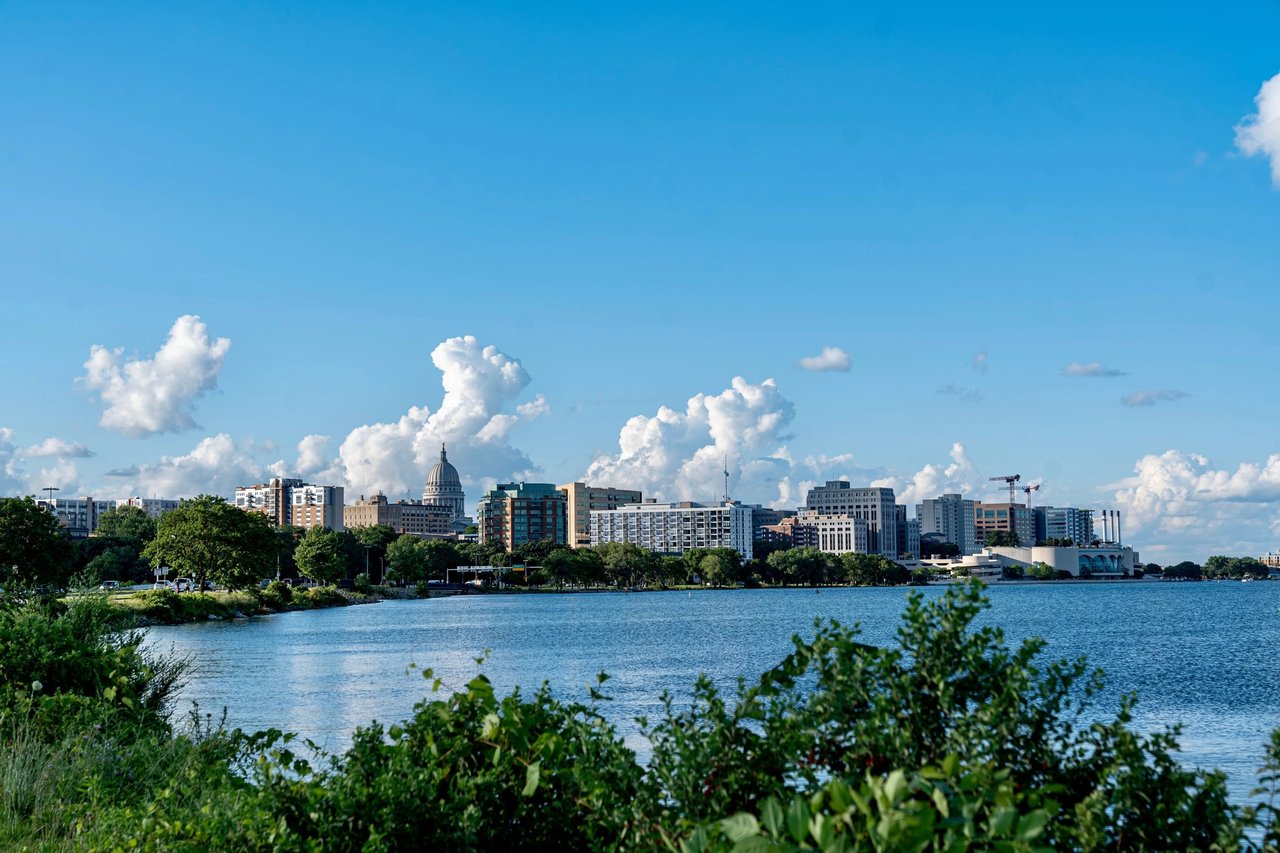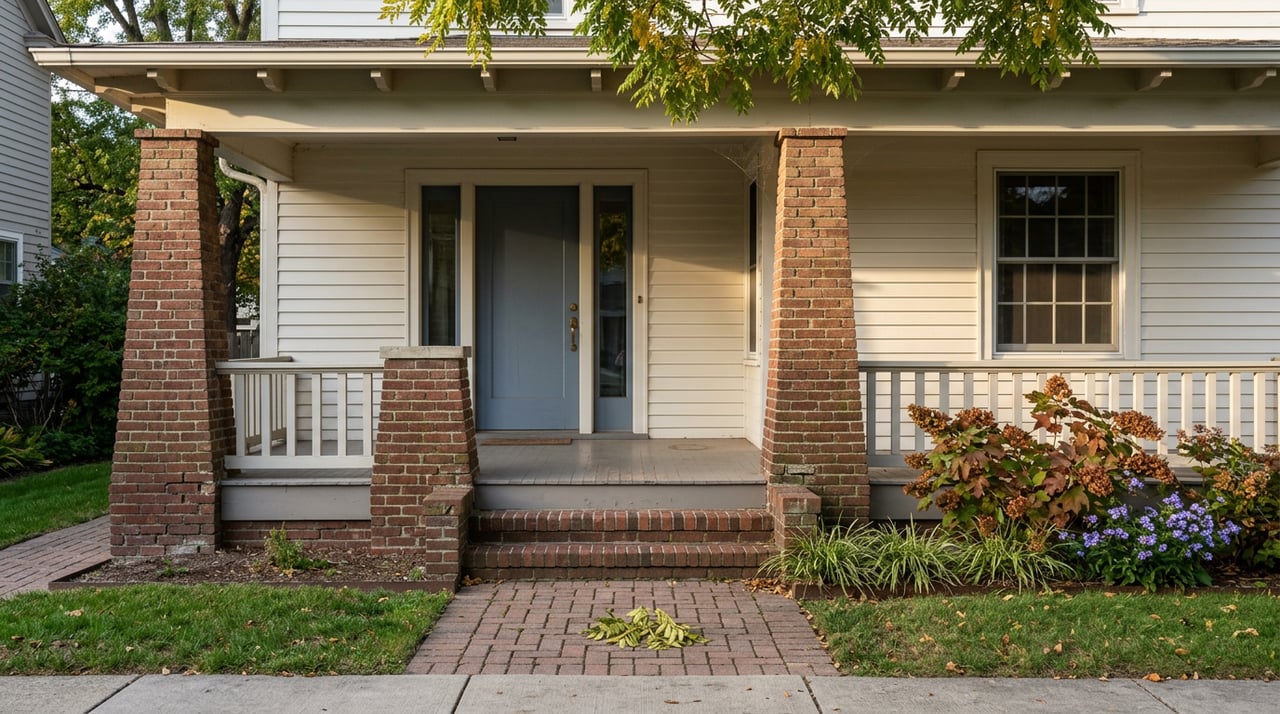
Late summer on Monroe Street still runs on shop hours. Orange Tree Imports keeps its doors open past dark on the first Friday of the month, Bloom Bake Shop sells out of morning pastries by ten, and the sidewalk in front of Chocolate Shoppe Ice Cream fills with the same unhurried foot traffic it has for years. That rhythm holds for exactly two more weekends.
Starting September 12, this stretch of Monroe Street between the UW Arboretum and Camp Randall Stadium starts running on a second, much louder clock. Six home football Saturdays land on the corridor between mid-September and late November, and the neighborhood's own fall traditions, the Monroe Street Festival among them, have to fit into the gaps. Most write-ups about Monroe Street mention that it "comes alive on game days" and leave it there. What actually happens is more specific, and more useful to know if you live within walking distance of Gate 6.
Six Saturdays, Not One
The 2026 home schedule at Camp Randall is set, and it front-loads the corridor's fall with more disruption than a typical September-to-November stretch:
| Date | Opponent | Kickoff |
|---|---|---|
| Sept. 12 (Sat) | Western Illinois | 6:15 p.m., BTN |
| Sept. 19 (Sat) | Eastern Michigan | 11:30 a.m., Peacock |
| Oct. 3 (Sat) | Michigan State (Homecoming) | By 4 p.m. |
| Oct. 24 (Sat) | USC | TBD |
| Nov. 7 (Sat) | Rutgers | TBD |
| Nov. 27 (Fri) | Minnesota | 6:30 p.m., NBC |
That's not a spread-out schedule. Three of the six home games fall inside a single four-week window in September and early October, which means the corridor absorbs its heaviest stretch of stadium traffic right when its own retail calendar, First Fridays, sidewalk sales, the seasonal shift in restaurant patio hours, is also trying to do its busiest work of the year.
The One Open Saturday
Here's the detail that doesn't show up in a quick Google search: the Monroe Street Festival, the corridor's own signature event, isn't scheduled on just any Saturday in September. This year it lands on September 26, the one Saturday in that stretch when the Badgers are away at Penn State. Every other Saturday between the two Camp Randall home openers and Homecoming has a kickoff attached to it. September 26 doesn't.
Whether that's deliberate scheduling by the Monroe Street business association or a fortunate accident of the Big Ten's rotation, the effect is the same. Locally owned shops get one uncontested Saturday to run sidewalk sales, the annual book sale outside the Monroe Street Library, and the food and drink specials that define the festival, without competing for sidewalk space or parking with 80,000 people headed to a game. If you've always assumed the festival and football season are just two things that happen to overlap, they don't. Not this year, anyway.
What Actually Closes, and When
The city's gameday traffic advisories, published ahead of every home game, describe a pattern residents on this stretch of Monroe learn quickly: Monroe Street itself, from Randall Avenue to Regent Street, along with Breese Terrace, typically closes to through traffic starting around 2 p.m. and doesn't reopen until roughly 1 a.m. That's an eleven-hour closure on a street lined with restaurants and shops that would otherwise be doing Saturday dinner business.
Private shuttles that used to load and unload on Monroe Street now use North Charter Street between Regent and Dayton, a change the city put in place to keep the Monroe Street corridor itself clearer for pedestrians. After the final whistle, on-street parking gets suspended on the westbound approaches to speed the exit, which is a polite way of saying: if your car is parked on Monroe or Regent after a game, plan on walking a few extra blocks to find it once traffic clears.
None of this is a surprise to anyone who's lived here through a full season. It's the specific mechanics, the exact streets, the actual hours, that turn "game days are busy" into something you can actually plan around.
The Driveway Economy
Walk a few blocks off Monroe on a Saturday morning before a noon kickoff and you'll see the neighborhood's informal parking market in action. Homeowners on side streets near Breese Terrace and Monroe rent out driveways directly to fans, typically somewhere in the $25 to $50 range per car, and the closer a driveway sits to the stadium gates, the earlier it fills. It's not organized by any single platform or association. It's neighbors making a Saturday's worth of extra money off a resource they already have, and it's been part of the Monroe Street game-day texture for as long as Camp Randall has sold out.
Walk Monroe Street at 4 p.m. on a Homecoming Saturday and the corridor's whole personality condenses into six blocks: sandwich boards angled toward the sidewalk, a line at Chocolate Shoppe stretching past the crosswalk, and a steady current of red moving north toward Randall Avenue like the street itself is being pulled somewhere.
The Two Games That Don't Fit the Pattern
Most of the six home dates follow a predictable shape: Saturday afternoon kickoff, a few hours of closures, back to normal by Sunday morning. Two games this year break that pattern, and both are worth marking on a calendar early.
The USC game on October 24 is the Trojans' third trip to Camp Randall and their first since 1965. That's not a marketing line, it's a genuine rarity, and rarities draw a different kind of crowd than a routine conference matchup. Expect more out-of-town visitors, more hotel bookings on the west side, and more pressure on the driveway market than a typical October Saturday would bring.
The Minnesota game on November 27 breaks the pattern differently. It's not a Saturday at all. It's Black Friday, under the lights, 6:30 p.m. kickoff on NBC, which means the Paul Bunyan's Axe rivalry lands on the exact day a lot of Monroe Street households are hosting out-of-town family for the long Thanksgiving weekend. If you've got guests staying through that Friday, or if Small Business Saturday shopping is part of your usual post-holiday routine, this is the one date on the schedule that genuinely changes the shape of a weekend most people have already planned around turkey, not touchdowns.
Reading Both Calendars at Once
The useful move here isn't avoiding football season, it's knowing which Saturdays are which. September 26 is Monroe Street's day. September 12, 19, and October 3 belong to the stadium, with Homecoming on October 3 likely to be the single busiest afternoon of the fall given the added Homecoming programming layered onto an already full game day. October 24 carries the added weight of a fifty-nine-year gap since USC's last visit. And November 27 asks Monroe Street to do double duty, hosting a nationally televised rivalry game on the one Friday of the year already spoken for by family and leftovers.
First Fridays keep running through the fall regardless, and the monthly cadence means there's always another one coming even if a particular Friday gets crowded out by a Thursday-night pregame crowd spilling into the weekend. The corridor doesn't shut down for football season. It just asks anyone who lives here to hold two calendars in their head at once for about ten weeks, and to know which one is driving traffic on any given Saturday before they decide when to run errands, grab a table, or just go for a walk down to the Arboretum.
That's the kind of detail that only shows up when you're actually tracking both schedules side by side, not just repeating that the neighborhood "comes alive" every fall. It does. It's worth knowing exactly when.
If you're weighing what it's like to live on a stretch of Madison that runs on two clocks for part of the year, or thinking about where else in Dane County might fit how you actually want your weekends to feel, Pinnacle Real Estate Group, LLC knows these blocks well enough to walk you through it. Let's start with a conversation.